
Ask any owner or ops leader why their AI project disappointed them, and you’ll hear some version of the same line: “It just wasn’t what we thought we were getting.”
That sentence is the real reason why AI projects fail — and it has almost nothing to do with the technology itself.
The real reason why AI projects fail isn’t the AI. It’s the missing agreement.
Most AI engagements start the same way. A vendor pitches a capability. The business gets excited about the possibility. Everyone nods. Work begins.
Three months later, something gets delivered. The vendor calls it a success. The business isn’t so sure. Nobody’s lying — they just never wrote down the same definition of “done” at the start.
That gap is where trust breaks down, budgets get wasted, and owners walk away from AI convinced it “doesn’t work for businesses like mine.” It’s rarely the model. It’s almost always the missing agreement.
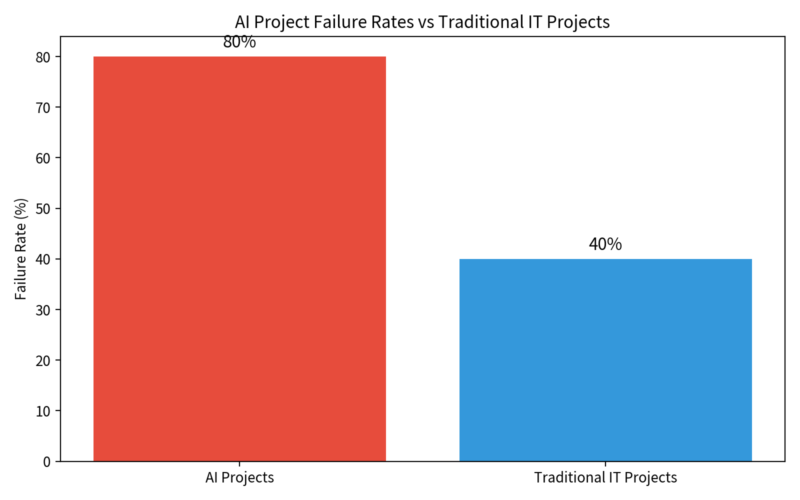
AI Project Failure Rates Are Significantly Higher
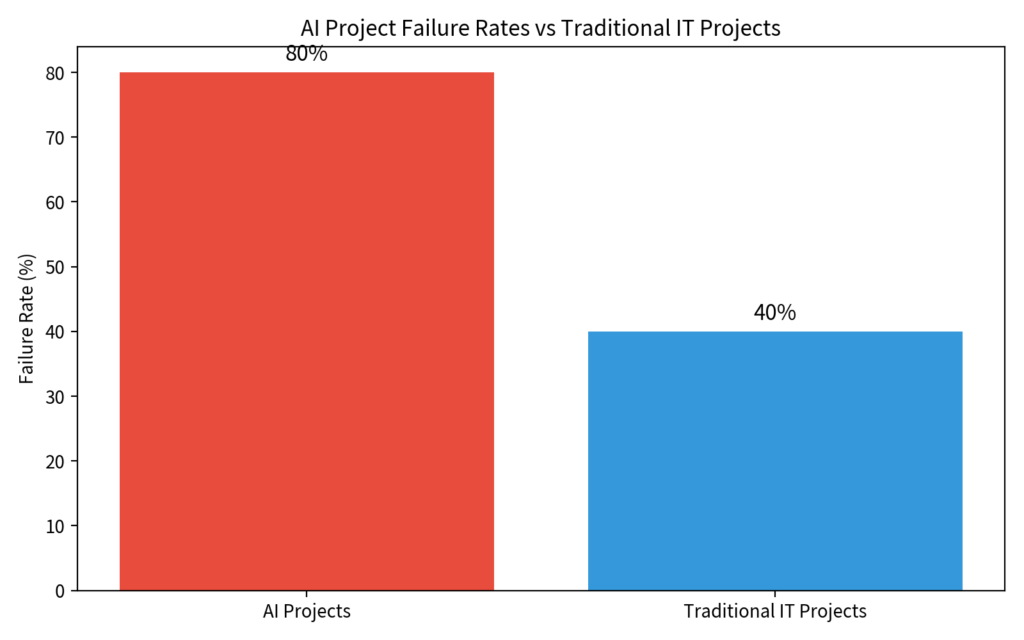
By some estimates, more than 80% of AI projects fail — roughly twice the rate of traditional IT projects.
What most “AI success criteria” actually look like
In most AI projects, the closest thing to defined AI success criteria is a sentence like:
- “Improve efficiency in the scheduling process”
- “Help the team make better use of their data”
- “Reduce manual work in reporting”
Each of those sounds reasonable. None of them can be checked. There’s no moment where you can point at the result and say, clearly, “yes, that’s what we agreed to” — or “no, it isn’t.”
Without something concrete, everyone is grading the project against whatever they privately imagined at the start. That’s a setup for disappointment even when the underlying work is genuinely good.
How to define AI success criteria before a project starts
The alternative isn’t complicated. Before real work starts, put the win in writing — in plain language, specific enough that anyone on either side could check it later without a debate.
Instead of “improve efficiency,” something like: “The system pulls production data from the three source systems automatically and produces the weekly report without anyone re-keying numbers by hand.” Instead of “better use of data,” something like: “Ops leads can ask a question about last week’s numbers and get an answer without opening five spreadsheets.”
The details will differ for every business. What matters is the shape: specific, observable, and agreed to before the building starts — not negotiated after the fact based on what got delivered.
Common Reasons AI Projects Fail
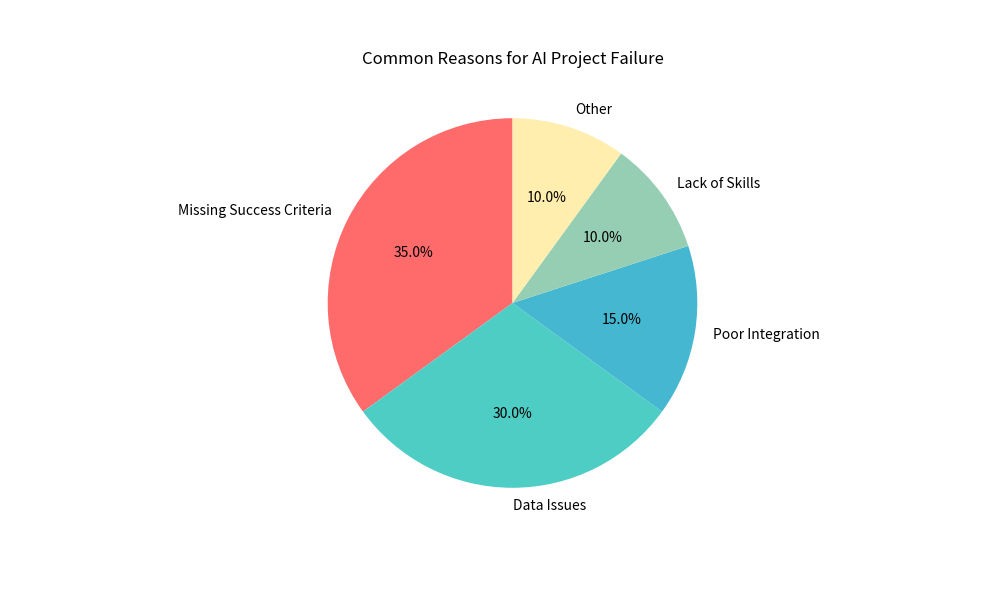
Missing or unclear success criteria is one of the top contributors, alongside data issues and integration challenges.
Why written AI success criteria change the outcome, not just the paperwork
When the win is written down early, both sides are building toward the same target. There’s no room for a vendor to quietly redefine success around whatever they managed to ship. And there’s no room for a client to move the goalposts because the original ask was too fuzzy to hold anyone to.
It also changes what happens if things don’t land. If the outcome was never specific, “it didn’t work” becomes a matter of opinion — hard to resolve, easy to argue about. If the outcome was written down and checkable, there’s a clear answer. Either it does what was agreed, or it doesn’t.
The impact is dramatic:
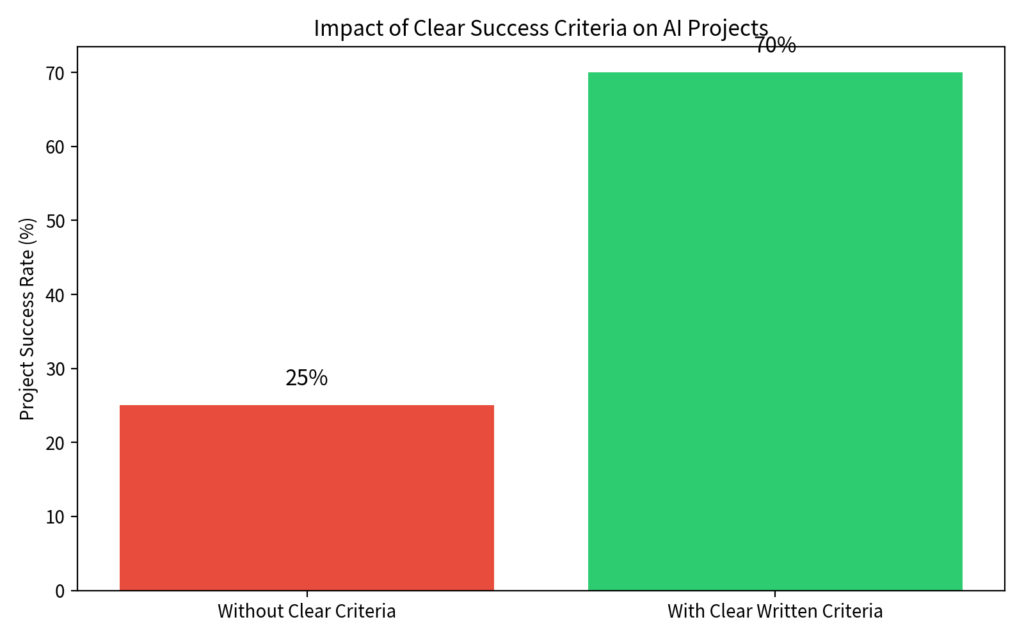
Projects with clear, written success criteria see much higher success rates (estimates around 70%+ vs. ~20-25% without them, based on broader project management patterns).
That’s exactly why we don’t ask for a 4-6 month commitment up front. Our Power BI Quick Start is built around the same idea: for a flat $10,000, you get a working proof-of-concept on your real data in 10 days — something concrete you and your team can actually look at and judge, not a slide deck describing what a bigger project might eventually deliver. It’s also the checkable evidence you bring to stakeholders before committing to a full implementation.
Frequently asked questions
Why do most AI projects fail or disappoint the business? Almost always because nobody agreed, in writing, on a specific and checkable definition of success before the work started — not because the AI itself didn’t function.
What should be in a written AI success definition? Specific, observable outcomes stated in plain language — something both sides could look at later and agree, without debate, whether it happened. Vague goals like “improve efficiency” don’t qualify.
When should AI success criteria be defined — before or after the project starts? Before. Defining it after work is delivered just means grading the result against whatever each side privately expected, which is exactly the gap that causes disappointment.
What to ask before your next AI project starts
If you’re evaluating any AI engagement — ours or anyone else’s — one question does more work than almost anything else:
“Can you write down, right now, exactly what I’ll be looking at when this is done — specific enough that we’d both agree whether it happened?”
If the answer is vague, that’s worth pausing on. Not because the technology won’t work, but because nobody’s agreed on what “working” means yet — and that’s the part that actually determines whether the project feels like a win or a letdown.
Want to see what that looks like with your own data? Check out the Power BI Quick Start — a working proof-of-concept in 10 days, before you’re committed to anything larger.
