
Table of Contents
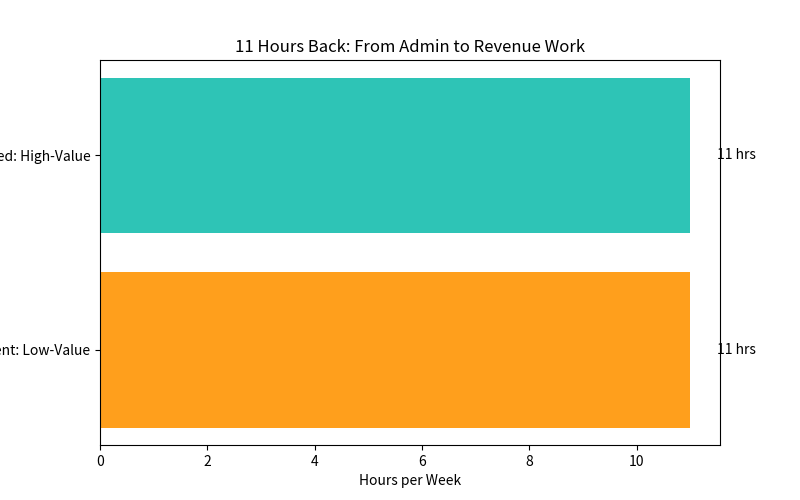
A mid-size logistics company ran a time audit last year. Their top account manager — the one driving 35% of repeat revenue — was spending 11 hours a week on pure admin: data entry, status update emails, and report formatting.
That’s not a rounding error. That’s a part-time job hiding inside a full-time role. And it’s the norm at most small and mid-sized businesses.
The real question about AI in SMBs was never “who does it replace?” It was always “what happens when your best people get those hours back?”
Your strongest performers are buried in the wrong work
Run an honest audit of where your team’s week actually goes. You’ll likely find patterns like this:
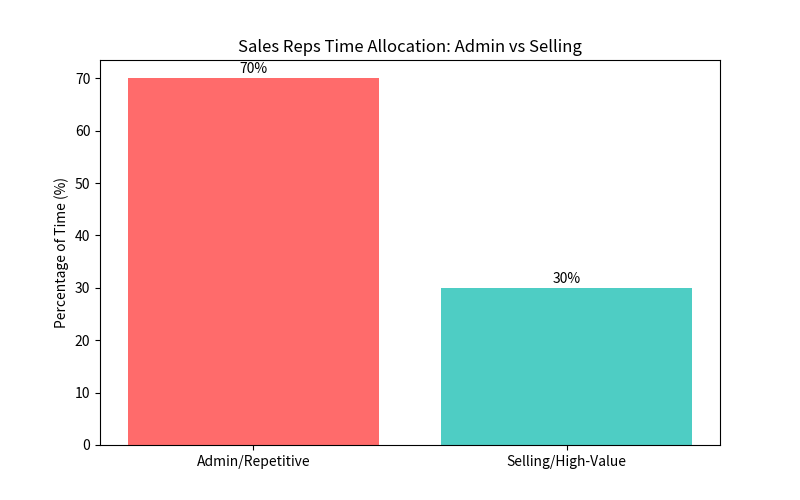
- Sales reps typically spend only 28–35% of their time actually selling. The rest disappears into CRM updates, manual follow-ups, lead cleanup, and admin.
- Office managers lose afternoons to scheduling, data entry, and approval chasing — instead of fixing the operational bottlenecks only they can see.
- CS leads answer the same questions on repeat instead of coaching the team or building self-serve resources.
This work isn’t pointless, but it’s low-judgment and repetitive — exactly what AI excels at. It’s locking your highest-value people into your lowest-value tasks.
Freed capacity is a powerful growth lever
When you reclaim even 5–11 hours, those hours don’t vanish. They get reinvested into:
- More revenue-facing work — One B2B services firm saw reps increase meaningful prospect touches from 12 to 20 per week after automating follow-ups (same team, no new hires).
- Faster problem-solving — Managers shift from reporting issues to fixing them.
- Strategic thinking time — Even one focused hour a week lets top performers plan instead of react. In an SMB, this breathing room is rare and disproportionately valuable.
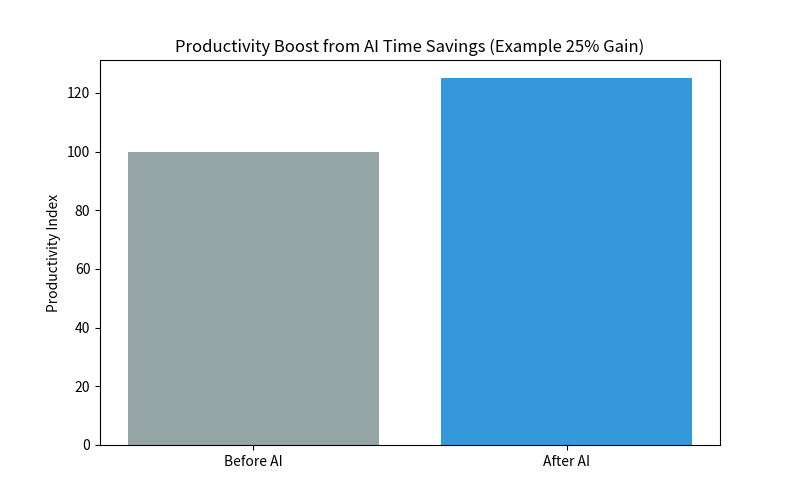
Studies of small businesses using GenAI show many seeing 20%+ productivity gains, with real revenue uplift for over 40% of users.
Why AI tools for small business teams hit harder
At a 5,000-person company, five freed hours per employee is a line item. At a 15-person company, it’s a structural shift.
Small teams wear multiple hats. Your best salesperson is also doing CRM cleanup at 6pm. Your CS person is triaging tickets Monday mornings. AI protects them from burnout on work that never played to their strengths — without added headcount.
For SMBs, this isn’t just efficiency. It’s a competitive advantage.
Where to start (without a full overhaul)
You don’t need a company-wide AI strategy. Start with the single most annoying recurring task everyone complains about and hand it to AI. If it works, you’ve proven the case internally without spending a quarter building consensus.
That’s exactly what the 14-Day AI Win one-pager is designed for. It allows your team to:
- Identify the high-impact task
- Estimate the real hours it’s costing
- Map what your team could achieve with the reclaimed time
Let’s save your time using AI tools for small business teams
Every business has them. The hard part isn’t believing the hours exist — it’s spotting which ones are actually recoverable, and which are the judgment calls only your people can make.
That’s the conversation we have with SMB leaders every week. No pitch deck, no six-month roadmap. Just a look at where your team’s week goes and which single task is worth handing off first.
If that’s useful, we’re easy to reach:
No call, no strings — just a practical 10-minute framework for your first win.
